No Dial Tone, No Default: The UK Copper Sunset Is a Design Brief for Failure
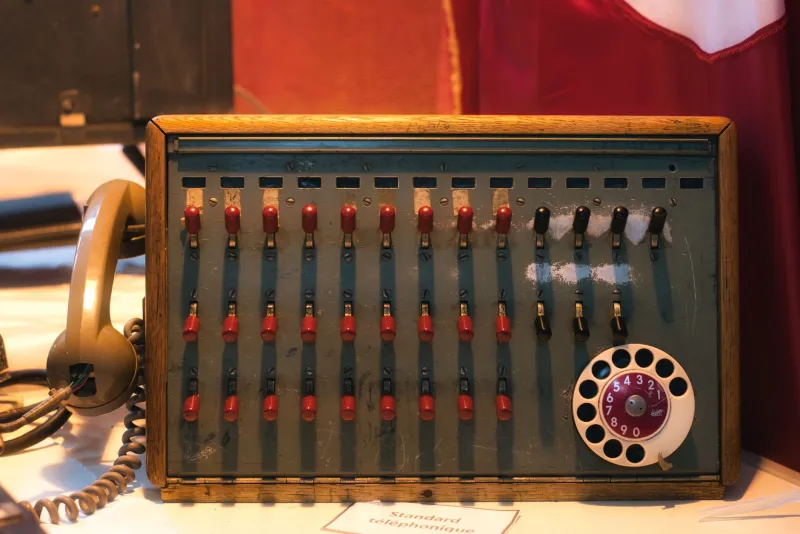
Somewhere in a cupboard in a rural village, a copper line is still doing a job that no one designed it to do in 2026. It is carrying a telecare alarm, a lift emergency dialler, or a broadband connection that has never quite recovered from the rain. The UK's copper sunset is usually described as infrastructure. It is better understood as a product design problem.
The switch-off is not a single switch. It is a slow brownout: stop-sells, regional migrations, exchanges moving to fibre, and a long tail of analogue kit that still expects a dial tone. As of 2026, the programme has slipped and stretched; the industry talks about waves and regions, not one clean date. That makes it harder, not easier, to design for. A hard deadline forces action. A moving deadline encourages everyone to assume someone else has checked the alarm.
The migration email is not a safety net
Most migration comms assume a reader. They assume an inbox that is checked, a broadband connection that works, a smartphone that is charged, and a person who understands the difference between a router and a phone line. They assume someone will click the link, order the adapter, book the engineer, and test the device. That is a lot of assumptions to load onto a single email with a subject line like 'Important information about your service'.
The people most exposed to the copper sunset are often the least likely to respond to that email. They are older. They are rural. They have a telecare alarm that was installed by the council and has not been touched since. They have a lift phone in a small block of flats. They have a monitored alarm line that works, as far as they know, because it has never gone wrong. 'Digital by default' is fine as a direction. It is dangerous as a single path.
Defaults are interfaces
A default is not neutral. It decides who gets forgotten. If the default is 'download the app', the person without a smartphone is an exception. If the default is 'we emailed you', the person who never reads email is an exception. If the default is 'the line will keep working until it doesn't', the person with the analogue alarm is an exception. Exceptions are where the failures live.
Good product design names the default and then designs the exception with the same care. It does not treat the exception as a support script. It does not bury the fallback in a PDF. It does not assume that the person who never read the migration email will somehow find the FAQ after the line goes dead. The fallback has to be a first-class path, not a paragraph at the bottom.
The failure signal is too quiet
The worst failures in digital-by-default systems are quiet. The app shows a green tick because the last sync was yesterday. The dashboard is empty because the device never checked in. The customer thinks it is working. This is the worst kind of failure: quiet, plausible, and late.
A FAQ is not a fail-safe. A status page is not a fail-safe. A migration email is not a fail-safe. A fail-safe is something that notices when the system has stopped hearing from the thing it is supposed to protect, and then escalates in a way that does not depend on the thing that has failed. For telecare, that means heartbeat checks, scheduled self-tests, battery and line monitoring, and a call to a nominated contact when the signal disappears. For lifts, it means testing the autodialler over the new line, under power failure, with the actual emergency response centre. For rural households, it means a fallback that is not 'try the website again'.
The copper sunset exposes this because it removes the assumption that the line is always there. But the same pattern shows up everywhere. A smart meter that stops reporting. A security camera that goes offline. A subscription that fails silently because the card expired. A backup that has never been restored. We are very good at designing for the happy path and very bad at designing for the moment when the happy path stops sending a signal.
Fail-safes need to be product features, not support scripts
When a product assumes always-on, the failure mode is a silent no-op. The app keeps showing the last known state. The user keeps trusting it. The support team finds out three weeks later, when something more expensive has broken. That is not a support problem. It is a product problem.
A real fail-safe has a visible state, a deadline, and an escalation path. Visible state means the user can see whether the device checked in. A deadline means the system knows how long it should wait before raising an alarm. An escalation path means a human or a phone call, not just a red dot on a dashboard. If the device cannot report, the system should still notice its absence. That is the difference between monitoring and hoping.
What good looks like
- Name the default and the exception. Write them down. Test both.
- Design a loud failure signal. If the system stops hearing from a device, it should say so before the user does.
- Make the fallback real. A phone number, a scheduled visit, a battery backup, a printed card. Not a link to a help centre.
- Test with the people who never read the migration email. Not just the ones who reply to it.
- Instrument the last mile. The last mile is where the analogue kit, the digital line, and the human meet. It is also where the failures hide.
- Assume the network will fail. Then design the product so that failure is visible, recoverable, and not left to a FAQ.
The copper sunset is a warning
The end of the landline is not just a telecoms story. It is a preview of every digital-by-default service that treats an analogue human as an edge case. The fix is not another FAQ. It is a louder failure signal, a real fallback, and a default that assumes the network will fail. The copper sunset is a design brief for failure. The UK should read it before the line goes quiet.