The Grid Was the Point: What Teletext Still Teaches UK Product Teams
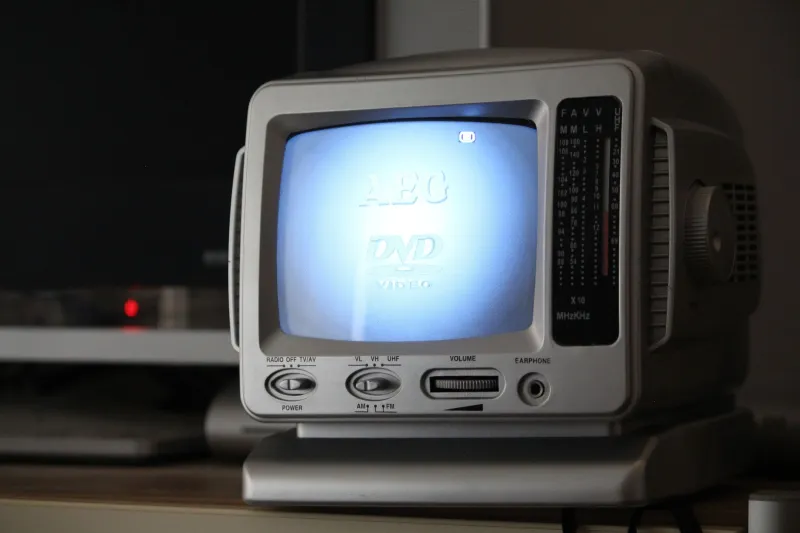
Ceefax page 101 was not beautiful. It was legible.
That distinction matters more than ever. In 2026, UK product teams have infinite canvas, animation libraries, AI assistants and enough analytics to drown a small town. Yet plenty of apps still cannot tell you where you are, what just happened or what to do next. Teletext, with its brutal 40-character grid and 24 rows, often did all three before your finger left the remote.
This is not nostalgia for beige TVs and slow page loads. It is an argument about constraints. Ceefax, Oracle and the odd genius of Digitiser did not succeed despite the grid. They succeeded because of it.
Forty characters is a ruthless editor
A teletext page gave you roughly 40 characters per line and 24 lines. No images, no pull quotes, no infinite scroll. Every word had to earn its place. That forced editors to lead with the point, cut the throat-clearing and make the hierarchy obvious. You knew which page you were on. You knew which button moved you forward. You knew when you had reached the end.
Digitiser, the legendary Teletext games section, worked because the format demanded rhythm. A joke had to land in a line or two. A review had to be useful before the reader lost patience. The constraint did not flatten the voice. It sharpened it.
Modern UK product teams talk a lot about content design. Teletext was content design with the volume turned up.
The teletext test
Here is a small proposal. Before shipping a feature, write its teletext page. Not as a literal UI, but as an internal test of clarity.
Can you explain the core task in 40-character lines? Can a new user tell where they are and what happens next? Is there a clear equivalent of a page number, a stable landmark that says you are in the right place? Does the feature fail gracefully when the network drops, as teletext inevitably did? If you cannot fit the essence onto one page, the scope is probably not clear enough.
Apply that test to a UK train ticket app, a banking onboarding flow or a supermarket loyalty scheme. Most would fail on line one. Not because the teams are careless, but because the product has accumulated so many secondary goals that the primary one has gone soft.
Where UK apps go quiet
There is a particular kind of modern clutter that teletext would have rejected outright. The dashboard that shows everything and prioritises nothing. The cookie banner that takes three taps before you can read a recipe. The AI chat panel bolted onto a service that simply needed a better search box. The notification that tells you something happened but not what to do about it.
UK public services often get this better than private apps. GOV.UK has spent years proving that plain language and predictable structure beat cleverness. That is a teletext instinct. The best UK digital products tend to have a page-number mentality: you know where you are, you know how to get back, and the important thing is visible without a hunt.
Constraint is not the enemy of ambition
Teletext had live pages, subtitles, interactive services and a version of fast information delivery that makes some modern apps look sluggish. It was not anti-innovation. It was pro-clarity. The grid forced teams to decide what mattered before they started decorating.
That is the lesson for 2026. Constraints are not a punishment. They are a way to stop the signal from drowning in the noise. A product team that can write the teletext page for a feature will ship something easier to use, easier to support and easier to explain to a colleague.
So keep the design system. Keep the analytics. Keep the AI if it earns its place. But write the page first. If it does not fit in 24 lines, you have not finished deciding what the product is for.
The grid was the point. It still is.