Barrier Methods: Why Parking in Britain Now Needs Five Accounts and One Bar of Signal
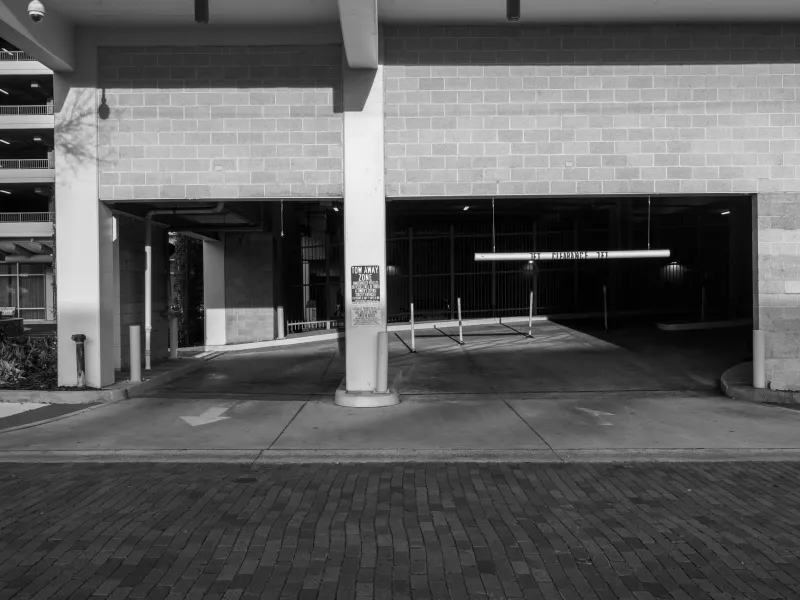
There is a specific kind of British optimism in driving into a multi-storey at 8:55 on a Tuesday, clocking the sign that says PAY BY APP, and believing it. You park. You walk to the lift. You open the app. You discover the app has never heard of this car park, or the car park has never heard of the app, or the lift lobby has the signal strength of a lead-lined vault.
Fifteen minutes later you are standing on the top deck holding a phone at arm's length like a dowsing rod, watching a spinner, as the first hour of your paid time quietly drains away. That is not a payment problem. It is a design problem wearing a payment problem's coat.
It used to be a machine, and the machine worked
Paying to park was once a transaction with a lump of metal. Coins in, ticket out, no account, no email, no "verify your vehicle". If the machine was broken, there was usually another one, and if there wasn't, you wrote a note and took your chances — an arrangement that was at least honest about how flimsy it was.
Somewhere in the 2010s we decided the meter was the inefficiency. Cash handling costs money to collect and count; coin fraud is annoying; the hardware ages. All fair. But the replacement we built wasn't a better meter. It was a small constellation of vendors, each with its own app, its own account system and its own idea of what a service fee should be.
Five apps, one postcode
Walk a single high street in any British city and count the payment logos on the signs. RingGo. PayByPhone. JustPark. APCOA Connect. The operator's own thing. Whichever in-house job the council commissioned in 2019 and has been quietly nursing ever since. Each one is competent. Each one is also a separate island with its own login, its own card-on-file, its own receipt format and its own interpretation of what your vehicle registration should look like.
None of them talk to each other. None of them know you already exist. You are, to each of them, a brand new person every time you park somewhere new — which, if you drive for work or for childcare or for the increasingly elaborate logistics of a family weekend, is constantly.
The accidental identity layer
Here is the thing nobody specified. Because each app wants an email, a password, a mobile number and a card, parking has become a de facto identity layer for anyone who drives. It sits quietly alongside your bank and your council tax account, except with worse security posture and a receipt you can never find again.
Think about what we are asking. To leave a car on a piece of tarmac for ninety minutes, a member of the public must create a persistent, credentialed, payment-enabled account with a private company they have never heard of, on a network connection they do not have. That is absurd when you say it aloud, and yet it is the default experience of parking in Britain in 2026.
Offline is the default, not the edge case
Product teams love to call poor connectivity an edge case. In car parks it is the primary case. Basements, undercrofts, thick concrete decks, metal-lined stairwells — these are buildings engineered by accident to defeat the one thing the payment method now requires.
The one genuinely good idea of the past decade was putting contactless readers on barriers and machines. Tap, pay, go. It works with a dead battery, it works with no signal, it works with cold hands. It is deployed unevenly and sometimes priced as a premium rather than a convenience, but when it is there, the entire problem vanishes.
Everything else assumes you have bars. SMS fallback exists in some systems and is bafflingly rare. Printed QR codes that resolve to a page with a saved card are rare too. What we mostly get instead is an app that shows a friendly error and a helpline number you cannot call, because — say it with me — there is no signal.
The quiet surcharge
Then there is the money. A convenience fee here, an SMS confirmation charge there, a minimum top-up that leaves credit stranded in a wallet you will never empty. Individually these look like rounding errors. Across a year of school runs and station drop-offs and the twice-weekly scramble outside a leisure centre, they add up to a real number — and that is before you count the time.
Because the fee is not the expensive part. The expensive part is the eleven minutes you spent in a stairwell trying to give someone money.
A calmer brief
If you were writing the spec from scratch rather than inheriting a decade of procurement, it would fit on an index card:
- Pay at the point of entry or the machine. Contactless first, chip and PIN second, coins as a dignified fallback.
- If there is an app, it does one job. This car park, this duration, this price. Guest checkout, no account required for a one-off.
- Offline-first, not offline-tolerated. A short code, an SMS, a QR that resolves to a saved card. Something that works on one bar.
- No stored value. No wallet, no top-up, no expiring credit. Take the exact amount.
- One readable receipt, delivered by email or text, with the location and the times on it.
- Grace by design. Ten minutes to pay after you leave the car, enforced automatically, so nobody spends their morning appealing a penalty they incurred while trying to comply.
None of that is novel. All of it is achievable with the hardware already bolted to the wall.
The only test that matters
Hand your phone to a visitor from out of town, put them on level minus two, and ask them to pay for two hours. If they cannot do it in under a minute with cold hands and one bar of signal, the product has failed — regardless of what the app store rating says, and regardless of how lovely the onboarding animation is.
The meter was never really the middleman. It was a dumb, honest endpoint. What we have now is a supply chain of intermediaries between you and a piece of tarmac, and every one of them wants to know who you are. Strip it back. Signal over noise — and a barrier that just takes the money.